Introduction :
Are persistent rains causing health issues for your family in Eastern Mumbai? The rainy season brings severe flooding, waterlogging near the Eastern Express Highway and Postal Colony, and ideal conditions for disease vectors. During this time, cases of vector-borne and waterborne illnesses surge across local wards, making preventive care crucial.
Navigating the monsoon requires understanding local health risks, from contaminated floodwaters to mosquito breeding sites in stagnant rain puddles. As clinical specialists at Acme Hospital in Chembur, our general physicians routinely diagnose seasonal conditions triggered by urban waterlogging. Early identification and timely intervention prevent minor infections from turning into severe complications.
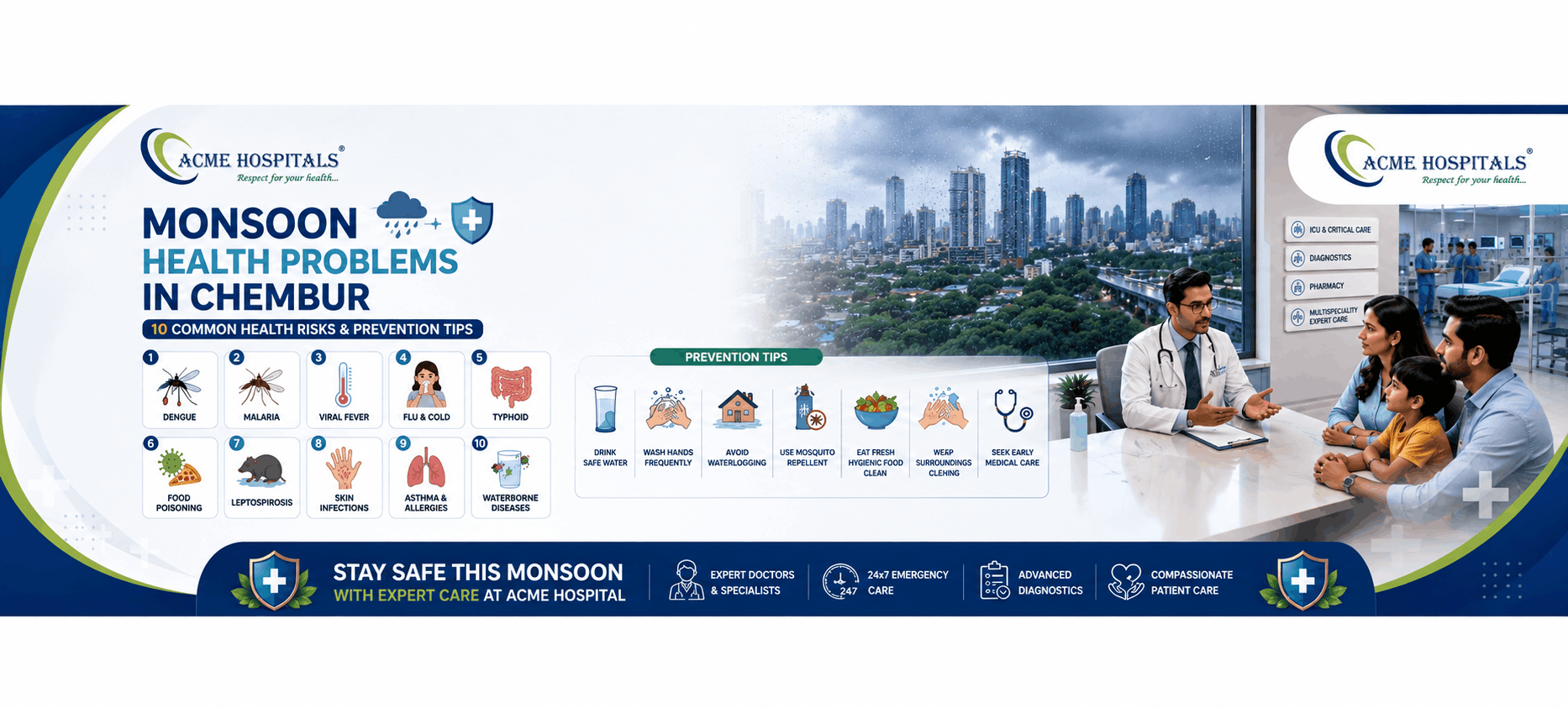
This guide outlines ten primary monsoon health problems in Chembur, explaining their causes, diagnostic indicators, and actionable steps to safeguard your health this rainy season.
1. Leptospirosis Infection
Wading through waterlogged streets in flooded low-lying areas in Chembur poses a significant health risk.
Leptospirosis is a bacterial infection caused by Leptospira bacteria entering open cuts or mucous membranes from rodent-urine contaminated water. It damages organ function, triggering high fevers, intense muscle pain, and jaundice. Seek immediate prophylactic treatment within 72 hours of flood exposure to prevent severe complications.
According to the Brihanmumbai Municipal Corporation (BMC) August 2026 Health Report, leptospirosis cases in Mumbai doubled following heavy monsoon downpours, leading health authorities to issue urgent prophylactic advisories.
Immediate Action Steps
- Wash exposed legs thoroughly with soap and clean water immediately after coming in contact with rainwater.
- Apply antiseptic solution over minor cuts, scrapes, or abrasions.
- Consult a physician within 24 to 72 hours for prophylactic antibiotic protocols if exposed to high-risk floodwaters.
2. Dengue Fever
Stagnant water in flower pots, discarded tires, and construction sites creates ideal conditions for Aedes aegypti mosquitoes.
Dengue fever is a mosquito-borne viral illness characterized by sudden high fever, severe joint pain, and blood platelet drops. Mosquitoes bite during daytime hours. Hydration and monitoring platelet levels are critical to preventing dengue hemorrhagic fever.
BMC vector control teams inspected over 49,000 potential breeding spots in mid-2026, identifying thousands of active Aedes breeding sites across residential zones.
Dengue Prevention Checklist
- Clear standing water from plant trays, coolers, and storage buckets every 3 days.
- Apply DEET or Picaridin-based insect repellent during morning and early evening hours.
- Install window screens and use mosquito nets in sleeping areas.
3. Malaria
Anopheles mosquitoes thrive in clean, stagnant rainwater left unattended around suburban housing societies.
Malaria is a parasitic disease transmitted through infected mosquito bites, leading to cyclical high fever, severe chills, and anemia. Early detection using rapid blood tests helps target the parasite before severe complications occur.
In July 2026, the BMC reported a sharp surge in malaria cases across urban wards, prompting widespread fogging operations in high-density residential areas.
4. Acute Gastroenteritis & Stomach Infections
Contaminated municipal water pipelines and unsafe street food cause widespread gastrointestinal distress during heavy downpours.
Monsoon gastroenteritis is an intestinal infection caused by ingesting food or water contaminated with viral or bacterial pathogens. Symptoms include severe stomach cramps, persistent vomiting, and watery diarrhea. Rehydration therapies prevent rapid electrolyte loss.
5. Typhoid Fever
Poor sanitation and cross-contamination between sewage lines and drinking water sources increase typhoid risks during monsoon floods.
Typhoid fever is a systemic bacterial infection caused by Salmonella typhi, spread through contaminated food or drinking water. It manifests as prolonged high fever, fatigue, abdominal pain, and intestinal discomfort requiring targeted antibiotic care.
6. Swine Flu (H1N1) & Respiratory Infections
High humidity and rapid temperature fluctuations create an environment where respiratory viruses spread quickly through close contact. Pulmonologists at Acme Hospital frequently evaluate patients presenting with post-rain bronchitis and secondary viral infections.
Swine Flu (H1N1) is a contagious respiratory infection that spreads via airborne droplets from coughs and sneezes. Symptoms include sore throat, body aches, persistent fever, and cough. Vaccination and respiratory hygiene reduce transmission rates.
7. Hepatitis A and E
Viral liver infections spread through contaminated drinking water during periods of heavy local flooding.
Hepatitis A and E are viral liver infections contracted by consuming contaminated water or food. They cause acute liver inflammation, fatigue, dark urine, and jaundice. Boiling water completely neutralizes these waterborne viruses.
8. Fungal Skin Infections
Constant dampness, wet clothes, and high humidity encourage fungal growth in skin folds and feet.
Monsoon skin infections occur when fungi like Tinea thrive in moist, humid conditions, causing severe itching, redness, and ringworm rashes. Keeping skin dry and changing out of damp clothes prevents fungal colonization.
9. Chikungunya
Transmitted by daytime-biting mosquitoes, this viral disease causes long-lasting joint pain and physical disability if left unmanaged.
Chikungunya is a mosquito-borne viral illness causing high fever accompanied by severe, debilitating joint pain. While rarely fatal, joint stiffness can persist for weeks, requiring rest, hydration, and anti-inflammatory management.
10. Common Cold & Influenza
Sudden shifts in temperature and humidity lower immunity, making individuals susceptible to common seasonal respiratory viruses.
Seasonal influenza is a viral respiratory tract infection causing nasal congestion, sore throat, mild fever, and headaches. Most cases resolve with symptomatic home care, warm fluids, and adequate physical rest.
Trust & Authority
"During the peak monsoon months, delaying medical evaluation for persistent fever or floodwater exposure significantly increases health risks. Prophylactic protocols and early diagnostic tests save lives."
— Dr. Daksha Shah, Executive Health Officer, BMC
Expert Clinical Insight
In clinical practice at Acme Hospital, over 60% of complicated monsoon health cases stem from self-medication during the first three days of symptoms. Fever should not be treated with over-the-counter pain relievers without a proper medical diagnosis. Misusing non-steroidal anti-inflammatory drugs (NSAIDs) like ibuprofen during an active dengue infection can worsen bleeding risks and lower platelet function. Acme Hospital's 40-bed facility, modern modular OTs, and super ICU facilities are fully equipped to manage critical monsoon emergencies and severe complications round the clock.
Conclusion
Managing monsoon health problems in Chembur requires proactive prevention, timely diagnosis, and professional medical guidance. Avoiding floodwaters, eliminating standing water around your home, and maintaining strict personal hygiene significantly lower your risk of seasonal illnesses. If you experience persistent high fever, body aches, or digestive trouble, seek medical attention immediately.
CALL TO ACTION
Protect your health and family this rainy season. Visit Acme Hospital in Chembur for comprehensive health checkups, 24x7 emergency medical care, in-house pathology testing, and monsoon diagnostic screenings.
👉 Book your consultation today and take the first step toward better health.Author Bio
Dr. Rituja Ugalmugle, MD (General Medicine)
Dr. Rituja Ugalmugle is a Consultant General Physician at Acme Hospital, Chembur, with over 13 years of clinical experience in internal medicine and infectious disease management across Mumbai. She has successfully treated thousands of seasonal illness cases and actively leads community health awareness campaigns on monsoon disease prevention and vector control.
