Introduction
The thyroid gland plays an important role in maintaining your body’s metabolism, energy levels, heart rate, temperature, and several other essential functions. When the thyroid produces too little or too much thyroid hormone, it can affect almost every part of the body.
Women are
The two most common thyroid conditions are:
- Hypothyroidism : The thyroid is underactive and produces too little hormone.
- Hyperthyroidism : The thyroid is overactive and produces too much hormone.
Although both conditions affect the thyroid, their symptoms can be vastly different. This guide explains the key differences between hypothyroidism and hyperthyroidism, female-specific warning signs, common causes, diagnosis, and when to consult a doctor.
What Is the Thyroid Gland?
The thyroid is a small, butterfly-shaped gland located at the front of your neck, just below the Adam's apple. It produces hormones—primarily Thyroxine ($T_4$) and Triiodothyronine ($T_3$)—that help regulate metabolism and influence how quickly your body uses energy.
Thyroid hormones affect several crucial functions, including:
- Energy production and metabolic rate
- Heart rate and blood pressure
- Body temperature regulation
- Digestion and bowel motility
- Muscle and brain function
- Menstrual cycles, ovulation, and reproductive health
When thyroid hormone levels become abnormal, it affects systemic health across your entire body.
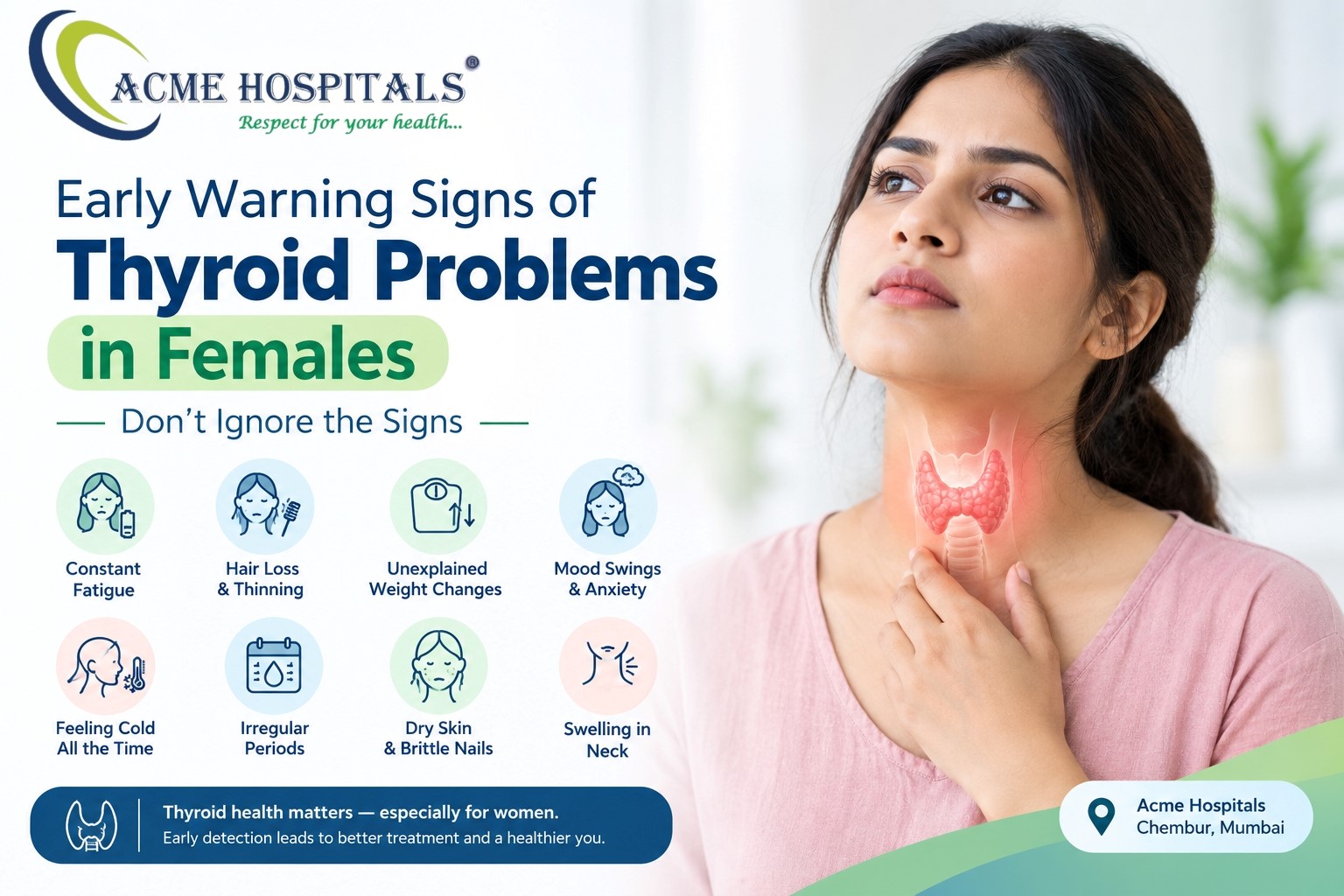
Early Warning Signs Specific to Females
Because thyroid hormones interact directly with estrogen, progesterone, and ovarian function, early thyroid dysfunction in women often shows up through reproductive and hormonal channels first:
- Menstrual Irregularities: Unusually heavy, prolonged, or painful periods (often linked to hypothyroidism) or unusually light, short, or missed periods (linked to hyperthyroidism).
- Fertility Struggles: Difficulty conceiving or recurrent early pregnancy loss, as imbalanced thyroid hormones interfere with regular ovulation.
- Severe Fatigue & Brain Fog: Exhaustion that isn't cured by a full night's sleep, often accompanied by forgetfulness or difficulty multitasking.
- Unexplained Weight Shifts: Sudden weight gain without diet changes, or rapid weight loss despite an increased appetite.
- Mood Fluctuations: Sudden shifts into depression, low motivation, or heightened anxiety, irritability, and panic-like feelings.
- Hair, Skin & Nail Changes: Noticeable thinning of outer eyebrows, diffuse hair shedding, brittle nails, or extremely dry, flaky skin.
Hypothyroidism Symptoms (Underactive Thyroid)
Hypothyroidism occurs when the thyroid gland does not produce enough thyroid hormones. Because these hormones drive your metabolism, low levels cause many bodily functions to slow down.
- Persistent Tiredness : Feeling exhausted even after getting 8+ hours of sleep.
- Unexplained Weight Gain : A sluggish metabolism causes fluid retention and weight accumulation despite normal eating habits.
- Cold Intolerance : Feeling unusually cold or having chronically cold hands and feet when others are comfortable.
- Dry Skin & Brittle Nails : Skin becomes dry, rough, or flaky, and nails split easily.
- Hair Thinning or Loss : Increased hair shedding during brushing or washing, often accompanied by thinning at the outer edges of the eyebrows.
- Constipation : Slower digestive motility leads to infrequent, hard bowel movements.
- "Brain Fog" : Difficulty concentrating, slow processing speed, or mild memory issues.
- Slow Heart Rate (Bradycardia) : Pulse rate dropping noticeably lower than normal.
- Low Mood & Depression : Feelings of sadness, apathy, or lack of motivation driven by chemical shifts.
- Menstrual Changes : Periods becoming significantly heavier, longer, or coming closer together.
Hyperthyroidism Symptoms (Overactive Thyroid)
Hyperthyroidism occurs when the thyroid produces more thyroid hormones than the body needs. This ramps up your metabolism, forcing body processes to work in overdrive.
- Unexplained Weight Loss: Losing weight rapidly despite eating the same or significantly more food.
- Rapid or Irregular Heartbeat (Tachycardia/Palpitations): A racing heart rate at rest, or a pounding sensation in the chest.
- Heat Intolerance & Increased Sweating: Feeling overheated in mild temperatures and sweating excessively.
- Nervousness, Anxiety & Irritability: Feeling continuously wired, jumpy, anxious, or unusually short-tempered.
- Tremors: A fine shaking or tremor in the hands or fingers when extended.
- Difficulty Sleeping: Insomnia, restlessness, or waking up frequently due to high night-time energy expenditure.
- Frequent Bowel Movements: Faster digestion causing loose stools or diarrhea.
- Muscle Weakness: Fatigue and loss of strength, especially in upper arms and thighs (making climbing stairs or lifting objects difficult).
- Menstrual Changes: Periods becoming noticeably lighter, shorter, or skipping months entirely.
Hypothyroidism vs. Hyperthyroidism: Key Differences
| Symptom / Feature |
Hypothyroidism (Underactive) |
Hyperthyroidism (Overactive) |
|---|---|---|
| Weight Effect | Weight gain / difficulty losing weight | Rapid, unexplained weight loss |
| Energy & Sleep | Sluggishness, excessive tiredness | Restlessness, anxiety, insomnia |
| Temperature | Sensitivity to cold | Sensitivity to heat / excessive sweating |
| Heart Rate | Slower than normal pulse | Rapid, racing, or irregular pulse |
| Bowel Motility | Constipation | Frequent bowel movements / diarrhea |
| Skin & Hair | Dry skin, thinning eyebrows/hair | Warm, moist skin, fine/brittle hair |
| Menstrual Cycle | Often heavier, longer, or more painful | Often lighter, shorter, or absent |
| Mood Profile | Depression, apathy, brain fog | Nervousness, irritability, panic |
What Causes Thyroid Disorders in Women?
Thyroid disorders develop due to autoimmune triggers, anatomical changes, or physiological stressors.
Common Causes of Hypothyroidism
- Hashimoto’s Thyroiditis: An autoimmune condition where the immune system mistakenly attacks the thyroid tissue. This is the #1 cause of hypothyroidism in women.
- Postpartum Thyroiditis: Inflammation of the thyroid gland occurring within the first year after giving birth.
- Medical Treatments: Prior thyroid surgery, radiation therapy to the neck, or certain medications (e.g., lithium).
- Iodine Deficiency or Excess: Imbalanced iodine levels in the diet.
Causes of Hyperthyroidism
- Graves’ Disease: An autoimmune disorder where antibodies stimulate the thyroid to overproduce hormones. This is the #1 cause of hyperthyroidism.
- Hyperfunctioning Thyroid Nodules: Non-cancerous lumps on the thyroid that start independently secreting excess hormones.
- Thyroiditis: Temporary inflammation that releases stored thyroid hormones into the bloodstream all at once.
How Are Thyroid Disorders Diagnosed?
Symptoms alone cannot confirm a thyroid condition because symptoms like fatigue, anxiety, and weight fluctuations overlap with many other health conditions. A doctor will order specific blood tests to evaluate your levels :
- TSH Test (Thyroid-Stimulating Hormone): Measures how much TSH the pituitary gland is sending to the thyroid. High TSH usually indicates hypothyroidism, while low TSH suggests hyperthyroidism.
- FT3 & FT4 (Free T3 & Free T4) Tests: Measure the actual un-bound thyroid hormones circulating in your blood.
- Thyroid Antibody Tests (TPO / TSH Receptor Antibodies): Helps identify underlying autoimmune diseases like Hashimoto's or Graves'.
- Ultrasound: Imaging used if a physician feels nodules or physical swelling (goiter) in the neck.
When Should You See a Doctor?
Consider scheduling an appointment with a primary care doctor, gynecologist , or endocrinologist if you experience persistent symptoms, such as :
- Unexplained weight changes despite no diet/exercise shifts
- Chronic fatigue that disrupts daily life
- Palpitations or a racing heart rate
- Menstrual irregularities or difficulty conceiving
- Visible swelling, tightness, or a lump at the base of your neck
- Extreme intolerance to heat or cold
Frequently Asked Questions
Why are thyroid problems more common in females?
Thyroid conditions are heavily influenced by autoimmune triggers and sex hormones. Estrogen interacts with thyroid hormones, making women more susceptible to thyroid shifts during major hormonal events like puberty, pregnancy, postpartum, and menopause.
Can thyroid problems cause infertility in women?
Yes. Both underactive and overactive thyroids can disrupt ovulation (the release of an egg), making it harder to get pregnant. Treating the underlying thyroid condition often restores normal fertility.
Is weight gain from hypothyroidism permanent?
No. Once a doctor diagnoses hypothyroidism and places you on proper thyroid hormone replacement therapy, your metabolic rate normalizes, making weight management achievable again.
🏥 Visit Acme Hospitals for Expert Thyroid & Hormone Care
If you are experiencing persistent fatigue, unexplained weight shifts, or menstrual changes, don't wait to get checked. Early evaluation and a simple thyroid blood test can give you answers and help restore your energy and balance.
The Endocrinology & Women's Health team at Acme Hospitals provides advanced diagnostic testing, imaging, and personalized care tailored to your health needs.
Contact Us:
- 📍 Address: Acme Hospitals, 3rd & 4th Floor, Signature Business Park, Behind Fine Arts, Postal Colony Road, Near Chembur Monorail Station, Chembur, Mumbai – 400071
- ⏰ Hours: Open 24/7
- 📞 Phone / Appointment Line: 8655006565
