Introduction
Everyone experiences stress at different stages of life. Work pressure, financial responsibilities, relationship difficulties and personal challenges can make people feel overwhelmed. In many situations, stress is a natural response to demanding circumstances and improves when the situation becomes manageable.
However, sometimes feelings of worry, fear and nervousness continue even when there is no immediate reason to feel threatened. This may indicate anxiety rather than everyday stress.
Understanding the anxiety vs stress differences is important because both conditions can affect emotional well-being, sleep, concentration and physical health. While occasional stress is a normal part of life, persistent anxiety may require professional attention.
In this article, we will explore the differences between stress and anxiety, their symptoms, possible causes and when you should consider seeing a psychiatrist.
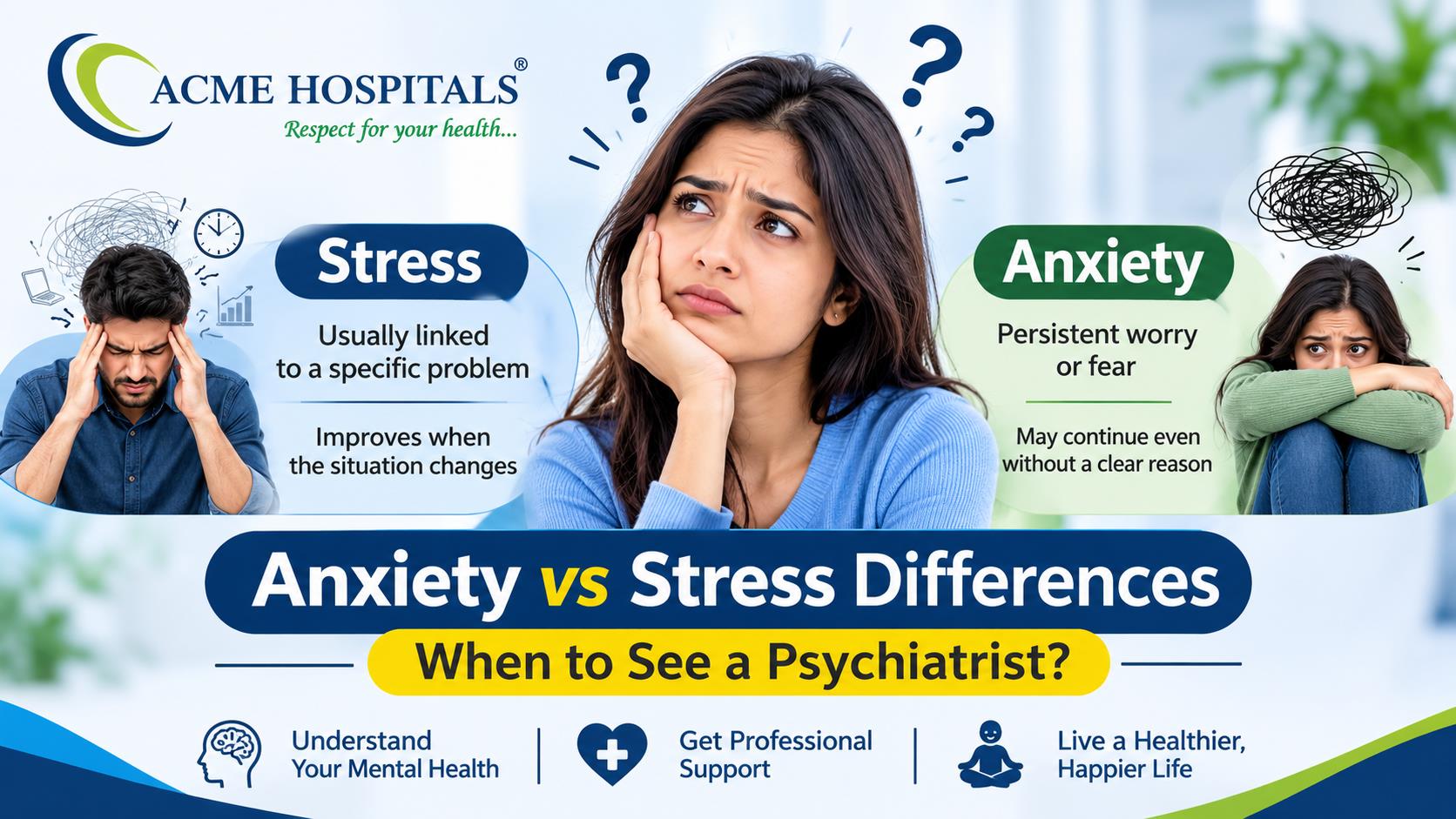
What Is Everyday Stress?
Stress is the body's natural response to a challenging or demanding situation. It can occur when someone faces work deadlines, examinations, financial problems, family responsibilities or unexpected life changes.
When a person experiences stress, the body activates its natural fight-or-flight response. This can temporarily increase heart rate, muscle tension and alertness.
For example, a person preparing for an important presentation may experience nervousness, sweating and difficulty concentrating. Once the presentation is over, these feelings generally decrease.
Common causes of everyday stress include :- Heavy workload and workplace pressure.
- Financial responsibilities and debt.
- Relationship or family conflicts.
- Academic examinations.
- Major life changes.
- Lack of sleep and insufficient rest.
Stress is not always harmful. In manageable amounts, it can motivate people to complete tasks, solve problems and respond to challenges.
What Is Anxiety?
Anxiety is a feeling of worry, fear or uneasiness about something that may happen in the future. It is a normal human emotion, but when it becomes excessive, persistent or difficult to control, it may indicate an anxiety disorder.
Unlike everyday stress, anxiety can continue even when the original stressful situation has passed or when there is no obvious immediate threat.
For example, someone may constantly worry about their health, family, work performance or future despite having no specific reason to expect something bad.
Common symptoms of anxiety include :- Excessive and uncontrollable worrying.
- Feeling restless or constantly nervous.
- Rapid heartbeat or palpitations.
- Difficulty falling or staying asleep.
- Muscle tension and headaches.
- Trouble concentrating.
- Feeling overwhelmed or fearful.
- Avoiding situations that cause anxiety.
Anxiety disorders are treatable mental health conditions. Depending on the symptoms and diagnosis, treatment may include psychotherapy, medication or a combination of both.
Anxiety vs Stress Differences: What Is the Difference?
Although stress and anxiety share several symptoms, they are not the same.
