Introduction
A Complete Blood Count (CBC) is one of the most commonly recommended blood tests used to evaluate a person's overall health. Doctors often suggest a CBC test during routine health check-ups or when someone experiences symptoms such as fatigue, weakness, fever, dizziness or frequent infections.
But what exactly does a CBC blood test reveal? It provides important information about red blood cells, white blood cells, haemoglobin and platelets. These components help doctors understand how well the body carries oxygen, fights infections and controls bleeding.
Understanding your CBC report can help you become more aware of your health and identify conditions that may require further medical evaluation.
What Is a CBC Test?
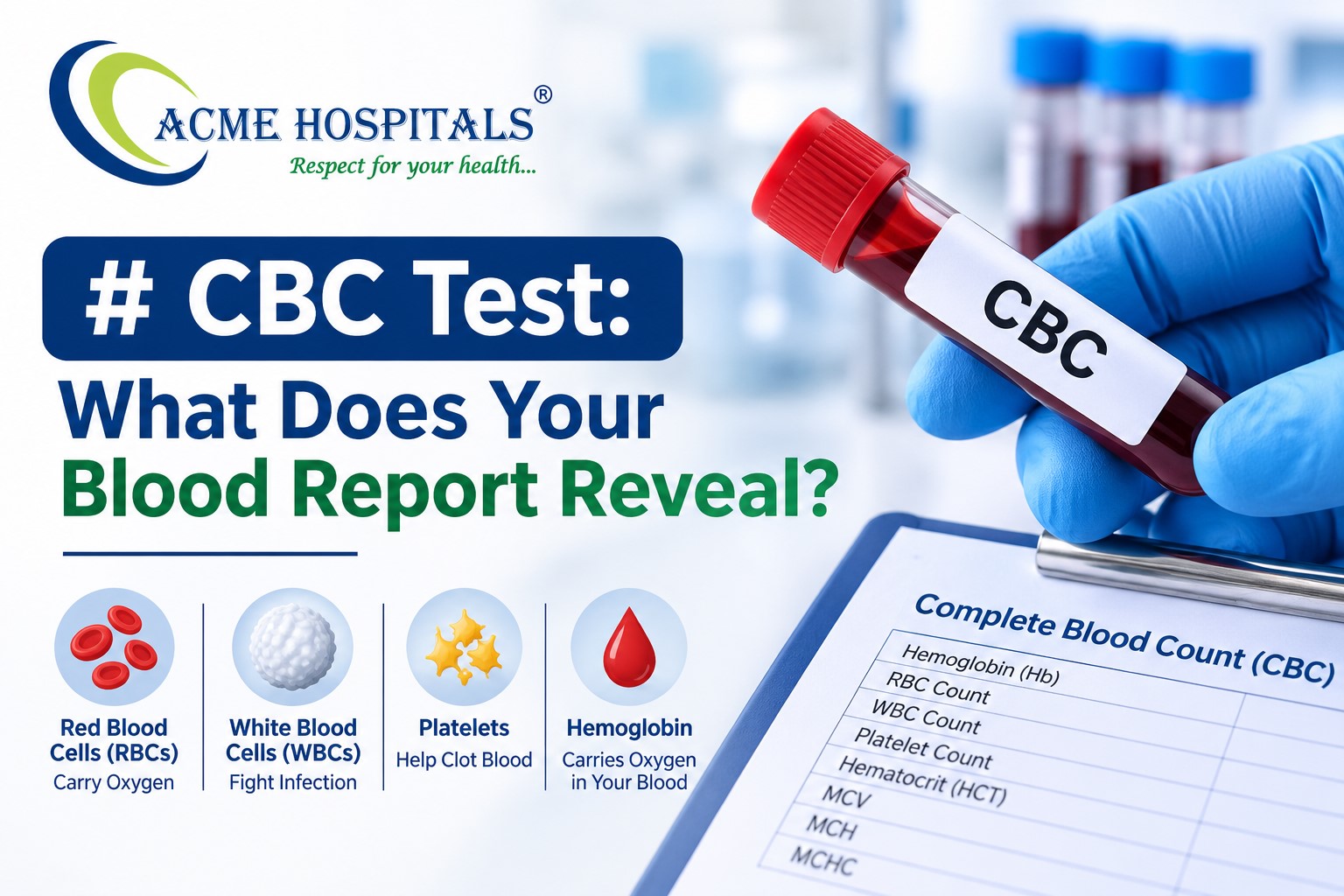
A Complete Blood Count (CBC) is a laboratory blood test that measures different components of blood. It helps doctors assess general health and identify possible signs of infections, anaemia, immune system disorders and certain blood-related conditions.
The test is usually performed by collecting a small blood sample from a vein in your arm. It is a simple procedure that generally takes only a few minutes.
A CBC test is commonly recommended during routine medical examinations, before certain surgical procedures and when investigating unexplained health symptoms.
What Does a CBC Blood Test Measure?
A CBC report contains several important measurements. Each parameter provides different information about your body's health.
1. Haemoglobin (Hb)
Haemoglobin is a protein found in red blood cells that carries oxygen from the lungs to different parts of the body.
Low haemoglobin levels may indicate anaemia, iron deficiency or other health conditions. High levels may occur due to dehydration or certain medical conditions.
2. Red Blood Cell Count (RBC)
Red blood cells transport oxygen throughout the body. The RBC count measures the number of red blood cells in a specific volume of blood.
A low RBC count may be associated with anaemia, blood loss or nutritional deficiencies. A high count may be associated with dehydration or other conditions.
3. White Blood Cell Count (WBC)
White blood cells are an important part of the immune system. They help the body fight infections and respond to inflammation.
A high WBC count may occur during infections, inflammation or certain other conditions. A low count may be associated with viral infections, medication effects or bone marrow disorders.
4. Platelet Count
Platelets help blood clot and prevent excessive bleeding when an injury occurs.
Low platelet levels may increase the risk of bleeding, while unusually high levels may be associated with inflammation or certain blood disorders.
5. Haematocrit (HCT)
Haematocrit measures the percentage of blood volume made up of red blood cells.
Low haematocrit levels may indicate anaemia, while high levels can occur with dehydration or other medical conditions.
6. Mean Corpuscular Volume (MCV)
MCV measures the average size of red blood cells.
It helps doctors understand the possible type of anaemia. Low MCV may be associated with iron deficiency, while high MCV can occur with vitamin B12 or folate deficiency.
Normal CBC Test Ranges
CBC reference ranges can vary depending on the laboratory, age, sex, pregnancy status and individual health conditions.
The following are approximate adult reference ranges:
| CBC Parameter | Approximate Normal Range |
|---|---|
| Haemoglobin (Male) | 13.5–17.5 g/dL |
| Haemoglobin (Female) | 12.0–15.5 g/dL |
| RBC (Male) | 4.5–5.9 million/µL |
| RBC (Female) | 4.1–5.1 million/µL |
| WBC | 4,000–11,000/µL |
| Platelets | 150,000–450,000/µL |
| Haematocrit (Male) | 41–53% |
| Haematocrit (Female) | 36–46% |
| MCV | 80–100 fL |
These ranges are general guidelines, not diagnostic cut-offs. Always compare your results with the reference range printed on your laboratory report.
What Can a CBC Test Detect?
A CBC test can help identify signs of several health conditions, including:
- Anaemia: Low haemoglobin or abnormal red blood cell measurements may suggest anaemia.
- Infections: Changes in white blood cell counts may indicate an infection or inflammatory response.
- Vitamin Deficiencies: Certain red blood cell changes may suggest vitamin B12 or folate deficiency.
- Blood Disorders: Abnormal platelet or blood cell counts may require further investigation for blood-related disorders.
- Bleeding-Related Problems: Low platelet levels may affect the body's ability to form blood clots.
A CBC test alone cannot confirm all these conditions. Doctors may recommend additional blood tests or investigations to establish the underlying cause.
When Should You Get a CBC Test?
Your doctor may recommend a CBC test if you experience:
- Persistent tiredness or unexplained weakness.
- Frequent infections or recurring fever.
- Pale skin or unusual fatigue.
- Unexplained bruising or bleeding.
- Dizziness or shortness of breath.
- Symptoms suggesting anaemia.
- A need for routine health screening.
It may also be recommended before surgery or during the monitoring of certain medical conditions.
Does a CBC Test Require Fasting?
In most cases, fasting is not required for a CBC test alone. You can generally eat and drink normally before the test.
However, if your doctor has prescribed additional tests such as fasting blood sugar or a lipid profile along with your CBC, fasting may be necessary. Always follow your doctor's instructions.
How Long Does It Take to Get CBC Test Results?
CBC results are often available within a few hours or by the next day, depending on the laboratory and testing arrangements.
Once the report is available, your doctor will interpret the results by considering your symptoms, medical history and other investigation findings.
Avoid diagnosing yourself based on a single abnormal value. Even small variations may not indicate a serious medical problem.
Why Is a CBC Test Important for Preventive Healthcare?
A CBC test is a useful part of routine healthcare because it provides information about several important blood components through a single investigation.
It can help doctors identify abnormalities early, investigate unexplained symptoms and monitor certain medical conditions.
Regular health check-ups, appropriate investigations and timely medical consultations play an important role in maintaining long-term health.
Conclusion
A Complete Blood Count (CBC) test is a simple but valuable investigation that provides important insights into your blood health. From haemoglobin and red blood cells to white blood cells and platelets, each parameter helps doctors assess different aspects of your body's functioning.
Whether you are experiencing unexplained weakness, frequent infections or simply undergoing a routine health check-up, your doctor may recommend a CBC test based on your healthcare needs.
For accurate interpretation and appropriate medical guidance, consult a qualified healthcare professional.
For consultations and healthcare services, connect with Acme Hospital, Chembur, Mumbai.
Frequently Asked Questions (FAQs)
1. What Is a CBC Test Used For?
A CBC test measures red blood cells, white blood cells, haemoglobin, platelets and other blood parameters. It helps doctors evaluate general health and investigate conditions such as anaemia and infections.
2. Is a CBC Test Enough to Detect Anaemia?
A CBC can identify blood abnormalities that suggest anaemia. Additional tests, such as iron studies, vitamin B12 and folate tests, may be required to identify the cause.
3. What Is a Dangerous WBC Count?
There is no single WBC value that determines danger. Very high or low counts should be interpreted by a doctor along with symptoms and other test findings.
4. Can a CBC Test Detect Infections?
Changes in white blood cell counts may indicate an infection. However, a CBC cannot identify every infection or determine its exact cause.
5. Can I Eat Before a CBC Test?
Yes. Fasting is generally not required for a CBC test alone. Follow your doctor's instructions if other tests are being performed simultaneously.
6. How Often Should I Get a CBC Test?
The frequency depends on your age, medical history, symptoms and doctor's recommendations. There is no universal requirement for everyone to undergo CBC testing at fixed intervals.
