Introduction
A stroke is a serious medical emergency that occurs when the blood supply to part of the brain is interrupted or when a blood vessel in the brain bursts. Without an adequate supply of oxygen and nutrients, brain cells can begin to die within minutes. This can lead to permanent disability, brain damage or even death.
One of the biggest challenges with stroke is recognising its symptoms at the right time. Many people ignore the early warning signs, assuming they are caused by tiredness, weakness or dizziness.
However, recognising the FAST stroke warning signs can help save someone's life. FAST is a simple method that helps identify the most common symptoms of a stroke: Face Drooping, Arm Weakness, Speech Difficulty and Time to call emergency services.
Understanding these signs and responding immediately can make a significant difference in recovery.
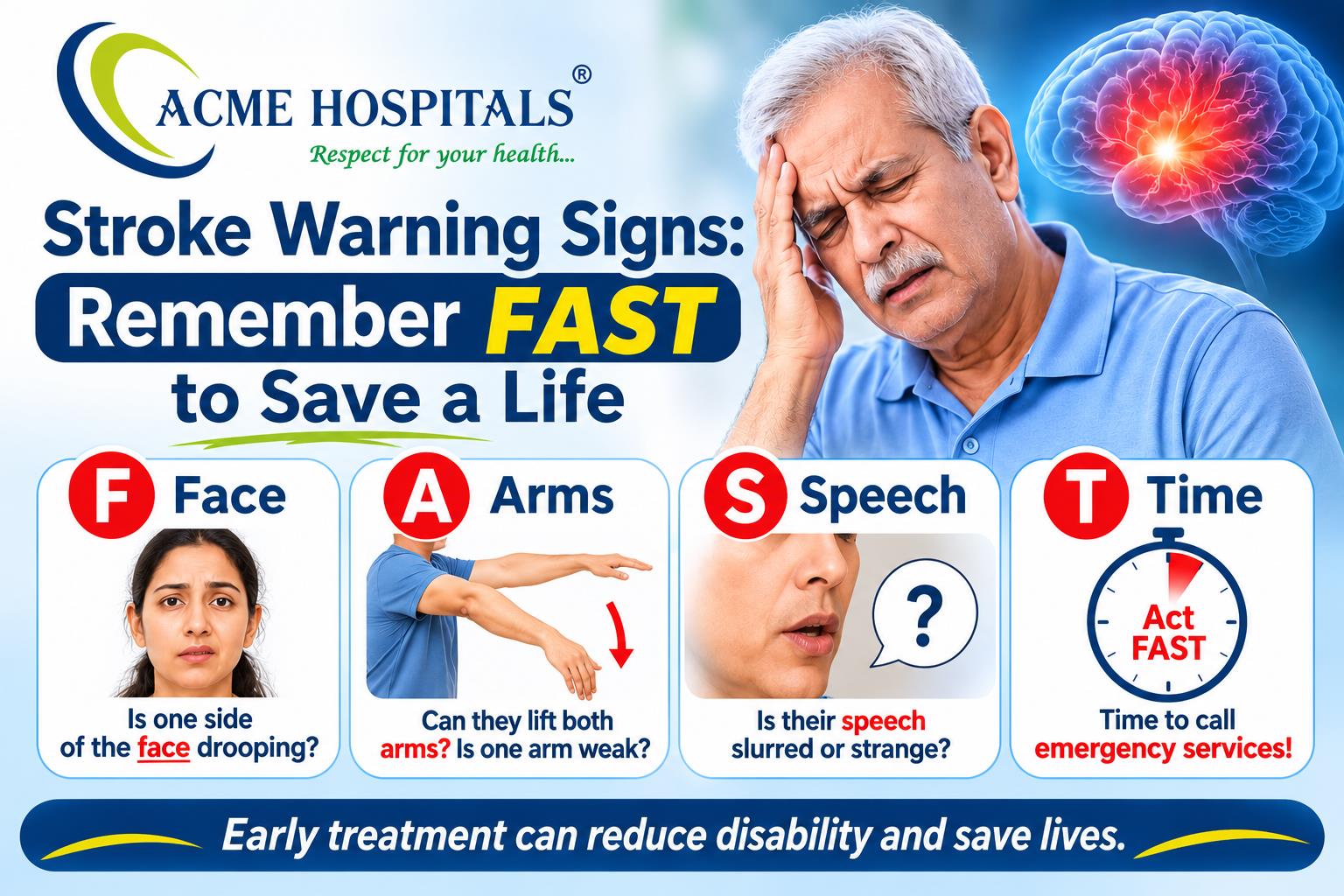
Stroke Warning Signs: Remember FAST to Recognise a Stroke and Save a Life
What Does FAST Mean in Stroke?
The FAST method is an easy way to identify the most common warning signs of a stroke. Each letter represents a symptom or an important action.
F – Face Drooping
One of the most noticeable signs of a stroke is sudden weakness or drooping on one side of the face.
Ask the person to smile and observe their face carefully. If one side of the mouth appears uneven or does not move normally, it could indicate a stroke.
A – Arm Weakness
Sudden weakness or numbness in one arm is another important warning sign.
Ask the person to raise both arms. If one arm drifts downward or cannot be lifted properly, it may indicate a neurological problem.
S – Speech Difficulty
A stroke can affect the parts of the brain responsible for language and communication.
Look for symptoms such as:
- Slurred or unclear speech.
- Difficulty speaking complete sentences.
- Trouble understanding simple conversations.
- Sudden confusion while communicating.
Ask the person to repeat a simple sentence. If they struggle to speak or their words sound unusual, seek emergency medical assistance.
T – Time to Call Emergency Services
Time is extremely important during a stroke. If someone experiences even one of these warning signs, seek emergency medical help immediately.
Do not wait for symptoms to improve. Note the exact time when symptoms first appeared and share this information with the medical team.
In India, you can call 112 for emergency assistance.
Other Important Warning Signs of a Stroke
Although FAST covers the most common symptoms, a stroke can also cause other sudden changes in the body.
Watch out for:
- Sudden vision problems: Blurred vision, double vision or sudden loss of sight in one or both eyes.
- Loss of balance: Difficulty walking, sudden dizziness or loss of coordination.
- Severe headache: A sudden, unusually intense headache without an obvious cause.
- Body numbness: Sudden weakness or numbness, particularly on one side of the body.
- Confusion: Difficulty understanding conversations, recognising situations or following instructions.
These symptoms should never be ignored, even if they appear without facial drooping or speech difficulties.
What Should You Do If Someone Shows Signs of a Stroke?
Knowing what to do during a stroke emergency can help prevent delays in treatment.
Follow these important steps:
- Call emergency services immediately.
- Note the time when the first symptoms appeared.
- Keep the person safe and comfortable while waiting for medical assistance.
- Do not give food, water or oral medication because swallowing may be affected.
- Do not allow the person to drive themselves to the hospital.
- Follow the emergency medical team's instructions.
Remember, do not wait for all FAST symptoms to appear. Even one sudden warning sign requires immediate medical evaluation.
What Causes a Stroke?
A stroke occurs when the brain does not receive enough blood and oxygen or when a blood vessel in the brain ruptures.
There are two major types of stroke:
1. Ischemic Stroke
This is caused by a blockage in a blood vessel supplying the brain, usually due to a blood clot. The affected brain cells may become damaged because they do not receive sufficient oxygen.
2. Hemorrhagic Stroke
This occurs when a blood vessel in the brain ruptures and causes bleeding. The bleeding can damage surrounding brain tissue and increase pressure inside the skull.
Both types are serious medical emergencies and require immediate hospital treatment.
Who Is at Risk of Having a Stroke?
A stroke can affect people of different ages, although certain health conditions and lifestyle factors increase the risk.
Common risk factors include:
- High blood pressure.
- Diabetes.
- High cholesterol.
- Smoking and tobacco consumption.
- Obesity and physical inactivity.
- Excessive alcohol consumption.
- Certain heart conditions, including atrial fibrillation.
- Previous stroke or transient ischemic attack (TIA).
Managing these risk factors through regular health check-ups, medical guidance and healthy lifestyle choices can help reduce the risk of stroke.
Can a Stroke Be Prevented?
Although not every stroke can be prevented, several lifestyle changes can significantly reduce the risk.
Consider these preventive measures:
Monitor Blood Pressure: High blood pressure is an important risk factor for stroke. Check your blood pressure regularly and follow your doctor's advice.
Manage Diabetes and Cholesterol: Keep blood sugar and cholesterol levels under control through appropriate treatment and regular monitoring.
Maintain a Healthy Diet: Include fruits, vegetables, whole grains and balanced meals. Reduce excessive salt and unhealthy fats.
Exercise Regularly: Physical activity supports cardiovascular health and helps maintain a healthy weight.
Avoid Smoking: Tobacco damages blood vessels and increases the risk of cardiovascular diseases.
Attend Regular Health Check-ups: Routine medical assessments can help identify risk factors before serious complications develop.
Frequently Asked Questions (FAQs)
1. What are the first warning signs of a stroke?
The common warning signs include sudden facial drooping, weakness in one arm and difficulty speaking. These symptoms can be remembered using the FAST method.
2. Can a stroke happen without warning?
Yes. Stroke symptoms often appear suddenly without noticeable warning. However, some people experience a transient ischemic attack (TIA), which produces temporary stroke-like symptoms and requires urgent medical evaluation.
3. What should I do if stroke symptoms disappear?
Seek emergency medical attention immediately, even if symptoms disappear. Temporary symptoms may indicate a TIA, which can be a warning of a future stroke.
4. Can young adults experience a stroke?
Yes. Although stroke risk generally increases with age, younger adults can also experience strokes. Certain medical conditions, lifestyle factors and other health issues can increase their risk.
5. How important is early stroke treatment?
Early treatment is extremely important because it can help reduce brain damage, improve recovery and lower the risk of long-term disability. Treatment depends on the type of stroke and the patient's medical condition.
